
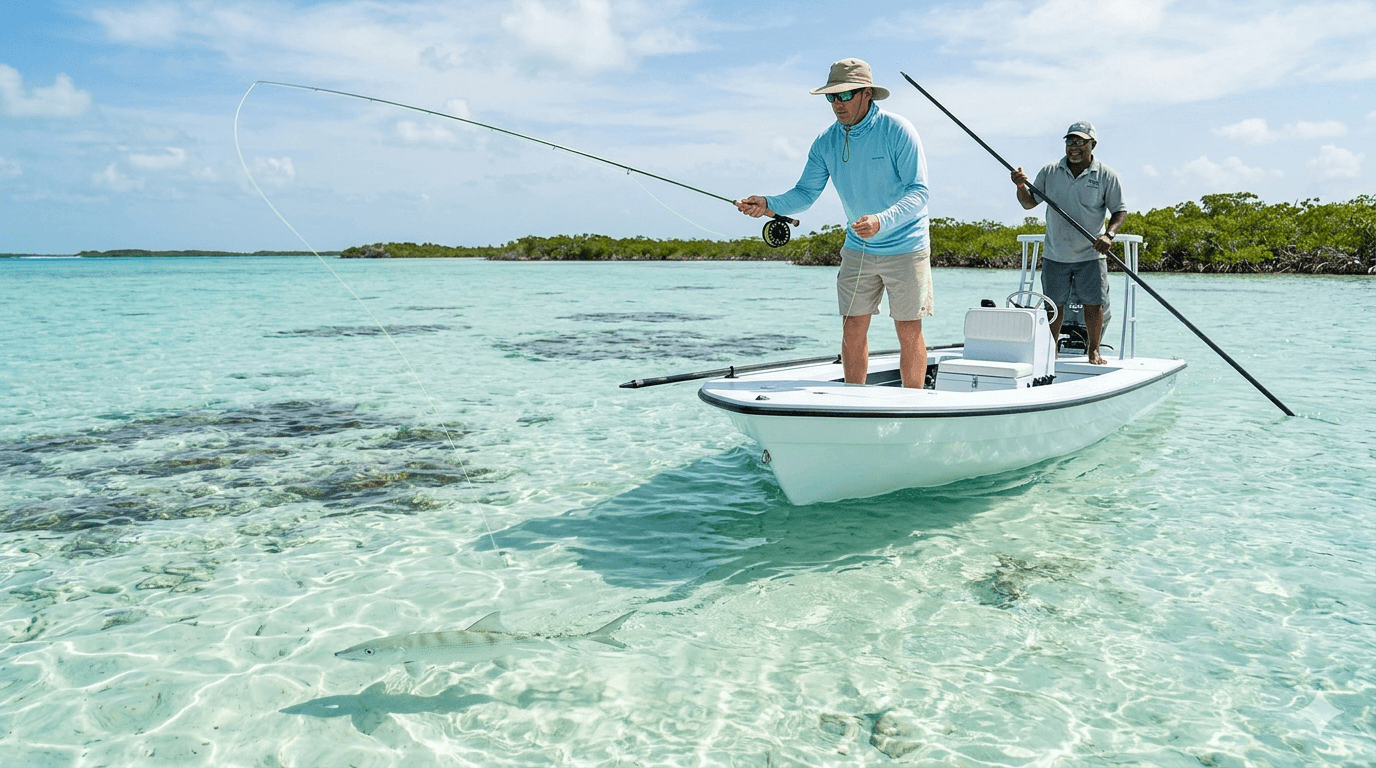

The Bahamas is the bonefishing capital of the world — and it's not close. Shallow tropical flats stretching for hundreds of miles, water so clear you can see fish from 80 feet away, and bonefish that average larger than almost anywhere else on the planet. If you're going to chase the grey ghost, there's no better place to do it.
Why Bahamas Bonefish Are Special
Bonefish are found throughout the tropical Atlantic and Pacific, but the Bahamas consistently produces the largest average fish and some of the most technical sight-fishing available. The combination of white sand flats, turtle grass, and crystalline water creates ideal visibility for spotting fish. Bahamas guides are among the most skilled in the world — many have spent decades poling these same flats and can read tidal patterns and fish behavior with near-perfect accuracy.
The fish themselves are exceptional. While a 4-pound bonefish is a trophy in many destinations, the Bahamas regularly produces 6–10 pound fish, with legitimate double-digit specimens caught every season on the best flats.
Where to Go: Top Bonefishing Destinations
Abaco Islands
The Abaco Islands are the most established bonefishing destination in the Bahamas. The Marls — 45 square miles of mangrove-laced shallow flats west of Marsh Harbour — is the most productive single bonefishing area in the country. Deep tidal creeks push fish onto the flats on an incoming tide; two hours before high water on a calm morning is when you find the biggest fish tailing in ankle-deep water. Cherokee Sound, south of Marsh Harbour, holds some of the largest average fish in Abaco and fishes best on a dropping tide. The guides here have been poling these flats for generations and know every productive edge.
Exumas
The Exumas are a 120-mile chain of cays with enormous untapped flats. Less pressured than Abaco, the Exumas offer a more remote experience. The flats here hold large numbers of fish, including resident permit and the occasional tarpon. Great Exuma (George Town) is the main hub, with access to dozens of productive areas within a short boat ride.
Bimini
Bimini sits just 50 miles from Miami — the closest Bahamian destination to the US mainland. The North Bimini flats are legendary, and the island has a well-established guide fishery. Average fish size is slightly smaller than Abaco, but Bimini is an easy add-on to a Florida trip and produces consistent numbers.
Grand Bahama
The flats around Freeport and East End hold excellent numbers of bonefish and are underutilized by visiting anglers. Less polished infrastructure than Abaco, but the fishing quality is high and crowds are minimal.
The Bahamas Flats Environment
Bahamas bonefish are primarily sight-fished from a shallow-draft skiff using a pushpole. Your guide stands on a poling platform at the stern and pushes the boat silently across the flat while you stand on the bow, searching for fish. When a school or single fish is spotted, you'll cast ahead of the moving fish, let the fly or lure sink to the bottom, and strip it as the fish approaches.
The challenge — and the appeal — is all in the presentation. Bonefish are easily spooked by noise, shadow, and an inaccurate cast. This is technical fishing at its finest.
Fly Fishing vs. Spin Fishing
Both methods produce excellent results in the Bahamas. The choice comes down to your experience and goals.
Fly fishing adds a layer of technical challenge that many anglers find deeply satisfying. An accurate 40–60 foot cast into the wind, delivered ahead of a moving fish, is genuinely difficult — and immensely rewarding when it works. Most Bahamas guides are experienced fly-fishing coaches and can work with beginners.
Spin fishing with light tackle and a small jig or live crab is highly effective and requires less technical precision. Many serious anglers split their time between both methods. For your first trip, spin fishing lets you focus on the experience rather than the mechanics of casting.
Best Months and Tidal Timing
Peak season (November–April): Trade winds clear the water, fish are actively feeding, and guides are at their sharpest. Water temperatures are comfortable for wading. Book early — the best guides fill their peak season months in advance.
Shoulder season (October and May): Fewer crowds and good fishing. Water can be slightly warmer but fish are still active early and late in the day.
Summer (June–September): Hot. Fish go deep in the middle of the day and can be difficult to spot. The best fishing is the first two hours after sunrise. Not the worst time to go — just manage expectations.
Tidal timing matters more than anything else. Bonefish move onto the flats as the tide rises, following the water as it floods the turtle grass. The two hours before high tide and the first hour of the drop are consistently the most productive window. A slack low tide with no movement is the hardest condition to fish. Your guide will plan the day around the tide table — let them.
Moon phases: Spring tides (new and full moon) create stronger tidal pushes and bigger water movement — more fish moving, but also stronger currents that can muddy the edges. Neap tides (quarter moon) are calmer and often produce outstanding sight-fishing on clear, glassy days.
Fly Patterns That Work
If you're bringing your own flies, these are the patterns that produce consistently across Bahamas flats:
Gotcha (size 4–6, tan or pink) — The most versatile Bahamas bonefish pattern. Works in all water depths and conditions. Bring at least a half-dozen.
Crazy Charlie (size 4–6, pink, tan, or white) — Classic shallow flat pattern. Effective when fish are tailing in calm, clear water.
EP Spawning Shrimp (size 4, tan/olive) — Excellent for tailing fish in turtle grass. The slow sink rate keeps it in the strike zone longer than a heavy bead-chain pattern.
Christmas Island Special (size 4, tan) — Works well in nervous water and on fish that have seen a lot of pressure.
For spin fishing: a 1/8 oz gold or tan jig, or a small soft-plastic crab imitation, covers most situations. Match the weight to the water depth — deeper tidal cuts require more weight to reach bottom before the fish sees the leader.
Essential Gear Checklist
Whether your guide provides gear or you're bringing your own:
- Polarized sunglasses — the single most important item. Without them you won't see fish.
- Sun protection: UPF 50+ long-sleeve shirt, sun gloves, and a wide-brim hat
- Light-soled flats boots for wading (optional but recommended)
- Fly rod: 8 or 9-weight, 9 feet, with a quality drag reel and 150 yards of backing. Tropical fly line.
- Spin rod: 7-foot medium-light with 10–15 lb braid and 12 lb fluorocarbon leader
Booking Your Bahamas Bonefishing Guide
The best Bahamas guides book months in advance, particularly for the October–May peak season. Here's what to look for when choosing a guide:
Experience on local water: A guide who has worked the same flats for 10+ years knows the fish's seasonal patterns, tidal preferences, and feeding behavior in ways that translate directly into more fish.
Communication: A great guide helps you understand where to look, how to cast, and when to strip. Ask about their coaching style before booking.
Boat and safety equipment: Reputable Bahamas guides operate well-maintained skiffs with current safety equipment and proper licensing.
Transparency on what's included: Most Bahamas fishing charters include all tackle, lunch, water, and licenses. Confirm what's included when you book.
Charted Waters lists verified independent guides across Abaco, the Exumas, Bimini, and beyond. Browse operators by destination to find a captain who matches your experience level and target species.