

From the Dock
September in the Bahamas means deeper water and offshore trips are outperforming the flats right now—plan accordingly. Full-day charters dominate bookings in this region, and several independent captains on Charted Waters specialize in eco-focused trips that target everything from bonefish to reef species and sea turtles.
A Bahamas eco tour boat puts you on the water with a purpose other than catching fish — though the wildlife you'll see overlaps heavily with what anglers target. Depending on the island, these trips cover mangrove creek systems, shallow coral reefs, blue holes, sea turtle habitats, and nurse shark nurseries. The boats range from flat-bottomed skiffs with a glass panel to purpose-built pontoons and open-hull vessels designed to idle through tight creek channels. What you see depends entirely on where you launch and who's driving. This guide covers the main eco tour formats across the Bahamas, what conditions look like right now in September 2026, and how to evaluate operators before you book.
September Conditions: What to Expect on the Water Right Now
September sits squarely inside hurricane season, and Bahamian operators are checking National Hurricane Center updates daily. That's not a reason to cancel your trip — it's a reason to book with a captain who will cancel if conditions turn dangerous, and rebook you without a fight. Water temperatures are running above 86°F across most of the Bahamas right now. Visibility on the flats and in mangrove systems is generally good when no weather system is stirring things up, but afternoon squalls are common. Plan morning departures. Most eco tour operators in September aim to be back at the dock by early afternoon. The shallow-water wildlife that makes these tours worth doing — nurse sharks resting on sand patches, stingrays cruising turtle grass flats, green turtles surfacing near mangrove edges — remains active in September. Warm water keeps marine life in the shallows. Just don't expect a glass-calm day every time. If you're booking a week out, give yourself two or three potential windows rather than committing to a single day.
The Main Types of Eco Tour Boats in the Bahamas
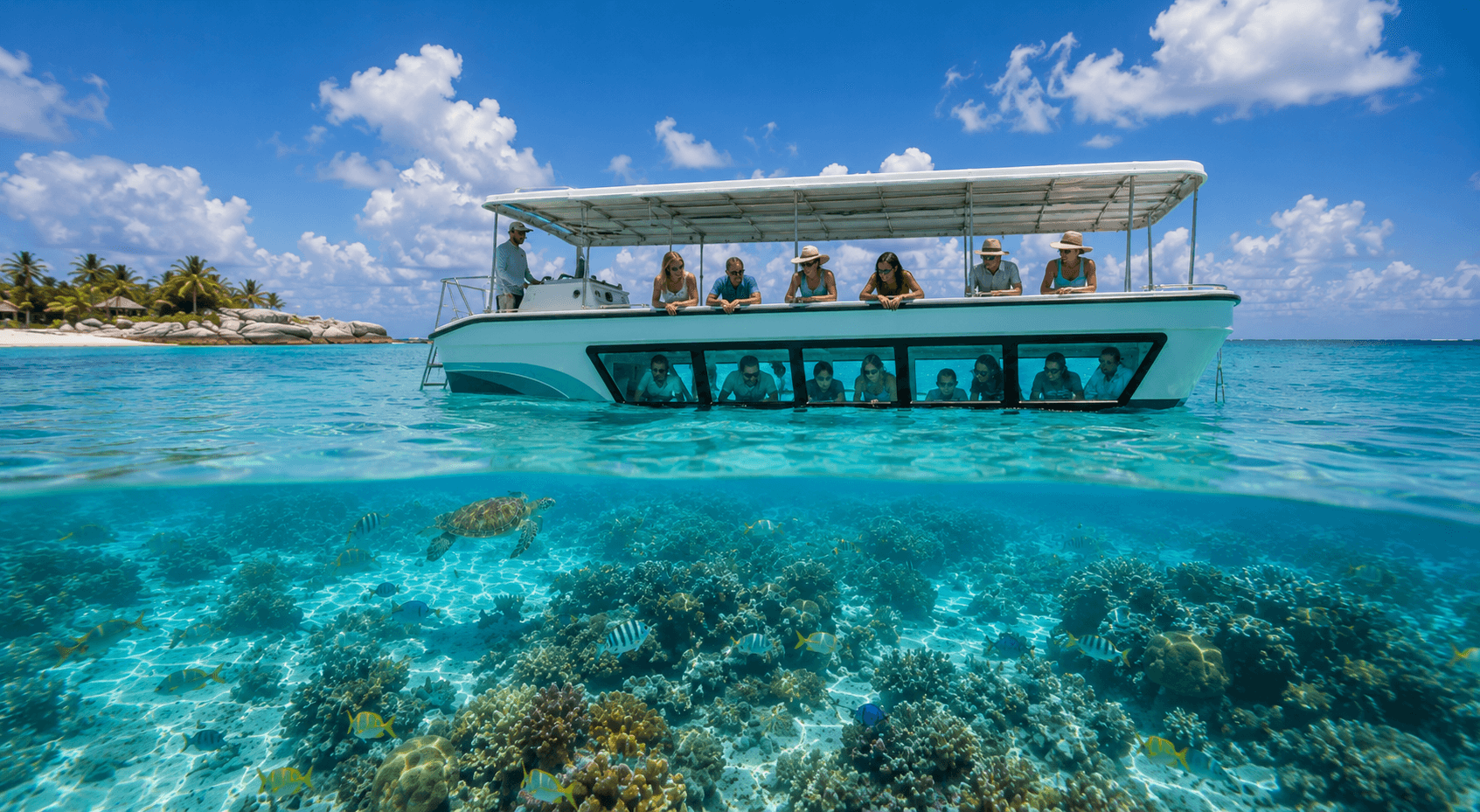
Glass-Bottom Boat Tours — Most commonly found near Nassau and Freeport. A glass or acrylic panel in the hull lets passengers look directly down at the reef without getting in the water. These run well for families with young kids or anyone who doesn't want to snorkel. Depth matters here: glass-bottom boats work best over shallow patch reefs at 8–20 feet. Over deeper water, the visual effect diminishes. Ask your operator what depth they cruise before booking.
Mangrove Creek Tours — Available on several Family Islands, particularly Long Island, Eleuthera, and Great Abaco. A flat-bottomed skiff or narrow-hulled vessel idles through tidal creek systems where red mangroves root into the water. These trips often include sightings of juvenile fish (mangroves are a primary nursery habitat), small sharks, stingrays, and birds. Good operators explain the ecology as they navigate — what species use mangroves as juvenile habitat, why root structure matters for reef health. September incoming tides push baitfish into these systems, which concentrates predators and makes wildlife viewing more reliable.
Reef and Snorkel Excursions — A captain takes you out to a specific reef system or sandbar, anchors up, and you get in the water. Some boats carry gear; others expect you to bring your own mask and fins. These vary widely in quality depending on the reef site the captain selects. Ask specifically which reef they visit — generic answers like "a beautiful reef nearby" tell you nothing useful.
Wildlife Flats Excursions — More common in the Exumas and around Andros. A captain poles or idles across shallow sand and grass flats specifically to spot marine wildlife — stingrays, nurse sharks, sea turtles, bonefish, permit. These share DNA with fishing guide trips but with a camera instead of a rod. In September, nurse sharks and stingrays are reliably in the shallows. Bonefish have pushed deeper as water temperatures peaked — don't expect them to be a centerpiece of a flats wildlife tour right now.
Blue Hole Tours — Localized to specific islands, particularly Long Island (Dean's Blue Hole is the deepest known ocean blue hole in the world at approximately 663 feet). A captain transports guests to the site for swimming and snorkeling in the entrance zone. These trips are simple in format — the geography is the attraction.
Where to Find the Best Eco Tours by Island
Nassau / New Providence — Highest concentration of glass-bottom boat and reef snorkel operators. Most run from Cable Beach or Nassau Harbour. Volume is high; quality varies. Look for operators who own their boats versus those re-selling seats on a larger vessel. Sunset and half-day formats are both common here.
Exuma — The Exuma Cays Land and Sea Park covers 176 square miles and is the most significant marine protected area in the Bahamas. Eco tours operating near the park perimeter offer access to some of the densest reef fish populations in the region. Swimmable nurse shark encounters are a well-established feature of Exuma boat excursions. Pig Beach (Big Major Cay) is often included in multi-stop tour formats — it draws crowds, so if you're after wildlife rather than novelty, tell your captain that upfront.
Long Island — Quieter, fewer tourists, serious wildlife. Dean's Blue Hole draws freediving and snorkeling visitors. The west-side flats support stingray and small shark encounters. Mangrove creek access on the north end gives this island a more complete eco tour menu than most. Operators here tend to run smaller, more personalized trips.
Andros — The largest island in the Bahamas and one of the least developed. The West Side flats system is massive — one of the largest shallow-water marine environments in the Atlantic. Eco tour boats here can cover miles of turtle grass and sand flats in a single morning. Bonefish habitat, but again, in September, those fish are sitting deeper. The platform operators on Charted Waters serving Andros skew toward fishing excursions, but the same captains often pivot to wildlife tours for non-fishing groups.
Abaco — The Marls on Great Abaco's west side is a 300-square-mile shallow-water labyrinth of mangrove islands and sand flats. Mangrove tour boats navigate interior channels that most vessels can't access. Abaco also has active reef systems off the Cays that support snorkel excursions with consistent fish and coral variety.
What the Captain Provides — and What You Should Ask Before Booking
Eco tour boats in the Bahamas are overwhelmingly operated by independent captains, not large tour companies. That's a good thing — it means you're dealing directly with someone who knows their local waters, not a booking desk. It also means what each trip includes varies by operator.
Before you confirm, ask these specific questions:
What does the boat have for shade? In September at 86°F-plus water temperatures, air temperature is equally punishing. Afternoon sun on an open skiff is brutal. Some boats have a Bimini top; some don't. Know before you go.
Is snorkel gear included? Many operators provide masks, fins, and snorkels. Some charge extra. If you have your own, bring it — rental gear fits nobody perfectly.
What specific sites does the trip cover? Vague answers are a red flag. A captain who runs this trip weekly should be able to name the reef, creek, or flat by location.
How many passengers are on the boat? Smaller groups move faster, see more, and can access shallower areas. A 20-person glass-bottom tour boat and a six-person flats skiff are fundamentally different experiences.
What's the cancellation policy for weather? Hurricane season is active right now. A reputable captain will have a clear weather cancellation policy. If they won't commit to a refund or rebook option when conditions are unsafe, walk.
Pricing on Charted Waters for Bahamas excursion and half-day trips runs from $75 to $1,500 per day depending on vessel size, duration, and operator. The average lands around $675. Full-day rates cover more ground; half-day formats work well for families with younger kids or tighter schedules.
Wildlife Rules and Regulations You Need to Know
Eco tours operate inside the same regulatory framework as fishing charters in the Bahamas. Some rules apply even if you're not fishing.
Queen Conch — If your tour includes a stop where guests can interact with or collect conch, the Bahamas DMR limits sport take to 10 per person per day, with a minimum 3-inch lip thickness. Take only legal, fully flared conch. Some areas carry additional local protections — ask your captain about the specific site.
Bonefish — Fully protected under Bahamian law since 2009. Catch-and-release only. If you're on a flats excursion and a captain offers to let you handle a bonefish for a photo, barbless hooks only and immediate release. These fish should never leave the water.
Nassau Grouper — Season is open March through November, with a 12-inch minimum. But eco tours typically aren't targeting grouper for harvest. Worth knowing that the closed season runs December through February if you're planning a return trip.
Spiny Lobster (Crawfish) — Season is open August 1 through March 31. If your tour passes through lobster habitat and someone wants to take a few, the limit is 6 per person per day with a 3.5-inch carapace minimum. No harvest of egg-bearing females. No scuba harvest permitted in the Bahamas — free diving only.
Marine Protected Areas — The Exuma Cays Land and Sea Park prohibits all forms of take, including fish, coral, and shells. If your eco tour operates inside the park, nothing comes off the reef. Ask your captain to confirm park boundaries before you reach for anything on the bottom.
The broader principle: eco tours earn their name by leaving the ecosystem intact. The Bahamas' marine environment is what makes these trips worth doing. Captains who enforce these rules aren't being difficult — they're protecting the resource that puts food on their table and keeps guests booking.
How to Choose the Right Eco Tour Operator in the Bahamas
Independent captains listed on Charted Waters own their boats and run their own schedules. You're negotiating directly, not through a middleman. That means better prices, more flexibility, and the ability to actually ask the person driving the boat what conditions are like today.
A few practical filters when you're comparing operators:
Local knowledge specificity. A captain who can tell you which specific creek system they use for mangrove tours, or which reef marker they anchor at for snorkeling, knows their water. Generic descriptions suggest a newer operator or one running a high-volume script.
Boat condition. Ask about the vessel — hull type, length, shade, safety gear. Reputable captains are proud of their equipment and will give you a straight answer. Evasive answers about the boat are worth noting.
Trip format flexibility. The best operators can adjust a trip based on conditions. If the planned reef site has surge that morning, they should have an alternative. Ask what they do when Plan A doesn't work.
Booking months. Charted Waters data shows April and June as the busiest booking months for Bahamas operators. September is slower — that works in your favor right now. Captains have more availability, and some have more flexibility on timing and group size. The tradeoff is weather monitoring. Any captain worth booking in September will have a clear protocol for storm-related cancellations before you hand over a deposit.