

From the Dock
Right now in September, the heat is pushing fish offshore and deep. Full-day trips are running strong here—book accordingly if depths are your target. Several independent captains on Charted Waters know this pattern well.
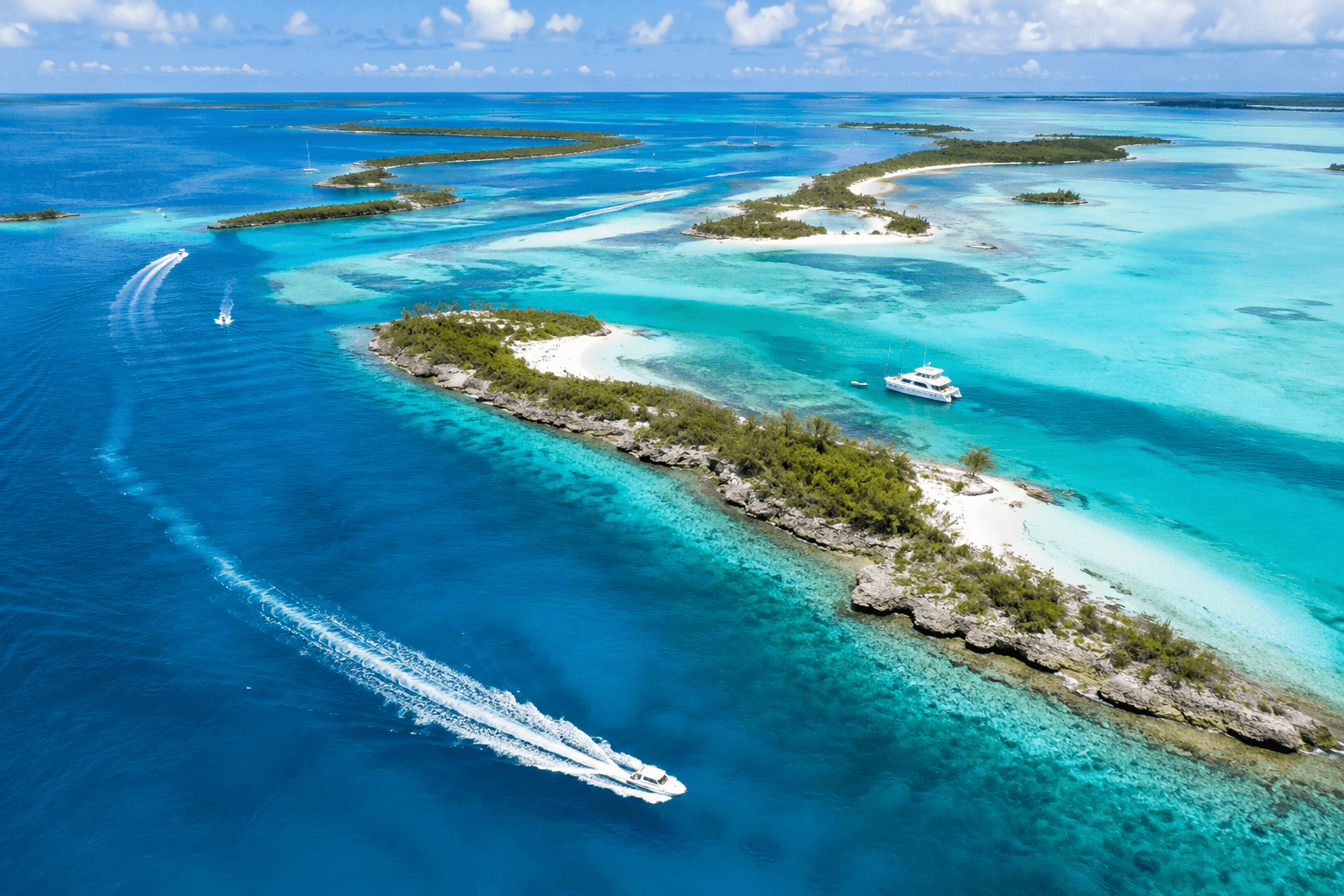
A Bahamas island hopping boat tour is exactly what it sounds like: you hire a captain, pick a route, and spend the day moving between cays, sandbars, reef cuts, and anchorages that a resort shuttle won't take you to. The captain drives. You swim, snorkel, eat lunch on a beach nobody else is on, and get back to the dock before dark. No crowds. No fixed itinerary handed down from a tour desk. You tell the captain what you want — reef snorkeling, a conch lunch stop, a sandbar swim — and he builds the day around it. That's the difference between an independent charter and a packaged group excursion.
September Conditions: What to Expect Right Now
September sits in the middle of hurricane season, and that shapes everything about planning a boat tour this month. Water temperatures are above 86°F — warm enough to swim all day without a wetsuit, but also the peak of Atlantic hurricane development. Operators across the Abacos, Exumas, and Nassau area actively monitor National Hurricane Center forecasts and will reschedule trips when tropical systems threaten. That's not a negative — that's a captain doing his job correctly. Build flexibility into your travel dates. A two-night buffer in either direction is a real planning tool in September, not an overreaction. On the upside: September is one of the quieter months for tourist traffic in the Bahamas. Anchorages that are shoulder-to-shoulder in April are nearly empty. If you can handle the weather variable, you'll have a lot of these spots to yourself.
Which Islands and Routes Actually Work
The Bahamas has 700 islands and 2,400 cays. Most island hopping boat tours concentrate in three areas, and the right one depends on where you're flying into and what you want to do.
The Exumas. The Exuma chain is the benchmark for this type of trip. The water is shallow, the sandbars are real, and the chain stretches roughly 120 miles — meaning a single captain can string together a dramatically different route every day. Staniel Cay is a common anchor point: you have Thunderball Grotto for snorkeling, the swimming pigs at Big Major Cay, and several uninhabited cays within a 20-minute run in any direction. Day charters out of Staniel Cay or Georgetown cover serious ground. Fly into George Town (GGT) for Exuma access.
The Abacos. Marsh Harbour is the operational hub. The Sea of Abaco is a protected body of water flanked by barrier cays — Elbow Cay, Man-O-War Cay, Great Guana Cay — and the crossing between them is short and manageable in most conditions. This makes the Abacos a strong option for first-timers or groups with kids. The runs between stops are rarely more than 20–30 minutes. Fly into Marsh Harbour (MHH).
Nassau and the surrounding islands. Rose Island, Allan's Cay, Porgee Rocks — the Nassau area has reachable day-trip destinations that don't require a multi-island flight. If your group is based in Nassau and wants a single-day excursion without repositioning, this works. The tradeoff is more boat traffic near Nassau than you'll find in the Exumas or Abacos.
What Happens on the Day
A typical full-day island hopping charter runs 6–8 hours. Departure is usually 8:00–9:00 AM. The captain briefs you on the route, confirms snorkel gear is aboard, and you're off.
Most itineraries hit two to four stops. A common Exuma structure: leave the marina, run to a sandbar for a swim, move to a reef or blue hole for snorkeling, anchor near an uninhabited cay for lunch, and run back with a stop at one more site on the way. The captain adjusts based on conditions — wind, current, whether other boats are already anchored at the first choice spot.
Half-day charters cover less ground, typically two stops, and run either 8:00 AM–1:00 PM or 1:00 PM–6:00 PM. If your group has young kids or someone in the party who tires easily on water, a half-day is the smarter call.
What the captain typically provides: life jackets, snorkel gear, a cooler with ice. What you bring: food and drinks (confirm this with your captain ahead of time — some include a light lunch or will stop at a beach bar), reef-safe sunscreen, and dry bags for phones and cameras. Full packing details are covered in the what-to-bring guide if you need a checklist.
Conch, Snorkeling, and What's Actually in the Water
The reef systems in the Abacos and Exumas support healthy populations of reef fish — snapper, grouper, grunts, sergeant majors — plus sea turtles, rays, and the occasional nurse shark under a ledge. You're not going to drift past a wall of fish like a nature documentary. But snorkeling a healthy Bahamian reef in calm September water with good visibility is genuinely worth the trip.
Conch stops are a legitimate part of many island hopping tours. Queen conch is legal to harvest year-round for sport fishing — the Bahamas DMR sets a limit of 10 per person per day with a minimum 3-inch lip thickness. Your captain will know the legal-sized shells by sight. This is not a technicality — undersized conch are returned to the water without discussion. Some captains offer cracked fresh conch on the boat as part of the experience, which is exactly as good as it sounds.
Nassau grouper are open season through November 30. If your captain suggests a light fishing component alongside snorkeling, Nassau grouper is a viable target — minimum 12 inches total length, and the closed season starts December 1, so September trips are well within the open window.
Note: spiny lobster season opened August 1, but your captain will know which areas carry additional local protections. Follow his lead.
How to Book an Independent Charter — and What It Costs
Independent charter operators list directly on Charted Waters. There's no resort desk in the middle taking a cut or allocating you to whoever's available that day. You see the captain's boat, his listed trip types, and his rate. You book directly with him.
For Bahamas island hopping and excursion-style charters, day rates on the platform currently range from $75 to $1,500 depending on boat size, trip length, and how many people the vessel accommodates. The platform average sits around $675 for a full-day charter. A half-day will come in lower. Group size matters: a $675 charter split six ways is $112 per person — competitive with any packaged resort excursion, and you have the entire boat.
Charter types currently listed in the Bahamas include full-day, half-day, sunset, bonefishing, and excursion formats. Island hopping day tours typically fall under excursion or full-day listings.
When you're comparing operators, look at three things: the boat (center console versus larger vessel — matters for group size and rough water comfort), what's included in the rate (snorkel gear, ice, any food), and the captain's communication. A captain who answers your pre-booking questions clearly is a captain who runs a tight operation on the water.
Booking Timing: When to Go, When to Avoid
April and June are the busiest booking months on the platform in the Bahamas — the weather is settled, the water is warm without being oppressive, and the islands are fully operational. If you want the best conditions and don't mind more company at the popular anchorages, April is the benchmark month.
September — right now — is a real trade-off. The quiet anchorages and lower rates are genuine advantages. The hurricane season variable is real. If you're booking a September trip, select a captain who is straightforward about his rescheduling and refund policy before you confirm. Any reputable operator will have a clear position on this.
November and early December offer a strong shoulder-season window: the hurricane threat has dropped, the water is still warm enough to swim comfortably, and the peak-season crowds haven't arrived yet. Worth considering if your dates are flexible.
Avoid planning a firm, non-flexible itinerary during June–October with no buffer days. It's not pessimism — it's how weather works in this part of the Atlantic.
Practical Details That Actually Matter
Seasickness. The Sea of Abaco is protected and generally calm. Open-water runs in the Exumas can be bouncy, especially on a windy afternoon. If anyone in your group is susceptible, take medication the night before — not 30 minutes before departure. Dramamine and Bonine both work. The captain can't slow the boat down enough to make a rough crossing comfortable for someone already sick.
Kids. Island hopping charters work well for children old enough to swim with a life jacket. Most captains are experienced with family groups. Confirm the minimum age policy when you book — some operators set a floor of 5 or 6 years old for open-water excursions.
Snorkel gear fit. Bring your own mask if you have one. Communal snorkel gear fits nobody perfectly. A well-fitting mask is the difference between a good snorkel and a frustrating one. You can buy or rent decent gear on most islands before departure.
Communication before the trip. Message your captain the day before to confirm departure time, what to bring, and current weather. A captain who's monitoring conditions will have already checked the forecast and will tell you straight if there's anything to watch.