

From the Dock
Summer conditions are pushing most target species deeper right now. Offshore and deep-drop trips—Snapper, Grouper, and Sailfish—are outperforming flats work through September. The guide below covers both approaches; book deep-water trips if permit and bonefish aren't your priority.
It is September 2026. Belize is in the rainy season. That is the honest starting point for anyone looking to book right now. Squalls move through fast, mornings are often fishable, and afternoons can shut down hard. The smart move: book shorter morning trips, build weather flexibility into your itinerary, and stay in contact with your captain the night before every outing. What the rainy season does not do is shut the fishing down. Offshore and reef trips are running reliably between weather windows. Permit on Turneffe Atoll are showing up on calm days. Snook are in their closed season through September 30 — keep that in mind. If you are targeting flats species right now, the waning gibbous moon is working in your favor. Post-full-moon conditions are historically strong for permit on the flats, and daytime feeding windows are tightening up as overnight illumination drops. Incoming tide is your first call regardless of moon phase. This guide covers the full picture: where to fish in Belize, which species are where, what gear you need, and what the regulations require.
What Makes Belize Different from Other Caribbean Destinations
Belize sits behind the second-largest barrier reef in the world. That reef creates an interior lagoon system that is genuinely enormous — and within that lagoon, you have channels, cuts, mangrove edges, tidal flats, and atolls spread across hundreds of square miles. The fishing diversity is the point. A serious angler can target bonefish on grass flats, switch to permit on a hard-sand reef edge, and find tarpon rolling in a mangrove channel — all in one day, in the same general area. The atolls offshore — Turneffe, Lighthouse, and Glover's Reef — add another dimension entirely. Each atoll has its own reef system, interior flats, and blue-water access. You are not choosing between inshore and offshore fishing in Belize. You are managing a decision matrix that most destinations do not offer. That is what keeps serious anglers coming back.
Permit Fishing: Turneffe Atoll Is the Target
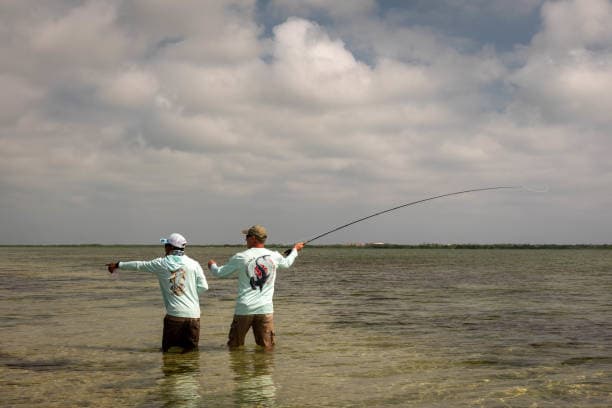
Turneffe Atoll is the top permit destination in Belize and one of the most productive permit fisheries in the Caribbean. The atoll's interior flats have hard sand and marl bottom — ideal permit habitat. Fish average 10–20 lb, with 30-plus-pound fish showing up regularly on the outer reef edges. Right now in September, permit on Turneffe are accessible on calm days. The waning gibbous phase is traditionally strong for permit — these fish key on incoming tide, and daytime feeding activity picks up as the moon's overnight illumination decreases. If conditions allow a Turneffe run this week, incoming tide windows are your priority. Rig a 9-weight with a floating tropical line, 12-foot leader tapered to 20 lb fluorocarbon, and a size 4 Merkin crab pattern. Del's Merkin, the Raghead, and EP Crab patterns all produce. Permit are protected under Belize Fisheries Regulations — catch and release only, barbless hooks required. No exceptions anywhere in Belizean waters. The logistics: Turneffe sits roughly 20–30 miles offshore from Belize City. Most guides run center consoles capable of the crossing in 45–60 minutes in decent conditions. In September's rainy season, that crossing is weather-dependent. If a front is sitting, your captain will call the Turneffe day and redirect you to closer flats. Trust that call.
Bonefish: Where to Find Them and What to Throw
Belize has bonefish everywhere — in the lagoon, around the cayes, and on the atoll flats. If you have already read the dedicated bonefishing guide on Charted Waters, this section is your quick-reference update for current conditions. In September, bonefish are active but their behavior is tide-driven and light-sensitive. Fish are working the flats on incoming tide, particularly in early morning before weather builds. The Turneffe interior flats, the flats around Ambergris Caye, and the Placencia area lagoon all hold fish right now. For gear: 8-weight rod, floating line, 9-foot leader to 15 lb fluorocarbon. Flies — Gotcha in size 4, Crazy Charlie, and Spawning Shrimp in tan or pink on a size 6 bonefish hook. These fish can be spooky on bright days; lighter tippet and smaller flies improve hook-up rates when the water is flat and clear. Bonefish are catch and release only under Belize Fisheries Regulations 2005 — barbless hooks are required in most flats areas. Handle fish in the water, minimize air time, and point them into the current before release.
Tarpon: Juvenile Fish Are Year-Round, Migratory Fish Have a Window
Belize holds two distinct tarpon opportunities. Juvenile tarpon — fish from 5 to 40 lb — live year-round in the mangrove lagoons, rivers, and tidal creeks throughout the country. They are accessible right now in September and are excellent targets during the rainy season when barometric pressure and cloud cover keep them active through midday. The New River, Belize River, and the lagoon systems around the southern cayes all hold juveniles. These fish eat Bunny Leech patterns, EP Minnows, and articulated streamers on a 9-weight with an intermediate or slow-sinking line. Migratory tarpon — the big fish, 80 to 150-plus pounds — move through Belize most reliably from March through June, with the peak often coinciding with the full moon in April and May when massive rolling schools appear in predictable locations along the reef. For migratory fish you need a 12-weight minimum, a large-arbor reel with at least 250 yards of backing, and a guide who knows where the schools are moving on a given week. Tarpon are fully protected under Belize Fisheries Regulations — catch and release only, no harvest under any circumstances. When releasing tarpon, use jaw spreaders carefully, keep the fish in the water, and revive completely before letting go.
Reef and Offshore Fishing: The Reliable Option Right Now
In September's rainy season, reef and offshore trips are the most consistently bookable options in Belize. The barrier reef system runs 185 miles along the coast and holds snapper, grouper, barracuda, and jack year-round. These are not consolation-prize species — a day on the reef targeting yellowtail snapper, mutton snapper, and Nassau grouper on spinning gear is a legitimate trip in its own right. For reef fishing, 20–30 lb spinning gear with fluorocarbon leader works. Live bait — sardines and ballyhoo from the captain — outproduces cut bait on most reefs. Offshore, sailfish are the primary target from Belize. The blue water sits relatively close to the atolls, and sailfish are caught throughout the year with a peak from October through February. Trolling ballyhoo rigged on circle hooks under a skirt, on 30–50 lb stand-up gear, is standard. Wahoo, mahi-mahi, and kingfish show up offshore as well. Ask your captain specifically about which offshore grounds are producing before you commit to a full-day run — fuel costs are real, and a shorter reef trip on a marginal offshore day is the smarter call.
Regions and Bases: Where to Fish From
San Pedro (Ambergris Caye) is the most popular base for flats and reef fishing. You have direct access to lagoon flats, the Belize Barrier Reef, and guides can run you to Turneffe for permit or bonefish. The town has good infrastructure and multiple independent operators. Placencia is the preferred base for anglers targeting the southern flats, the Placencia Lagoon, and the bonefish and tarpon around the Silk Cayes. It is quieter than San Pedro and the guide community is smaller — book early. Caye Caulker offers budget-friendly access to similar reef and flat fishing as San Pedro, with shorter runs to some inshore areas. Fewer liveaboard options but solid for multi-day independent fishing schedules. For Turneffe specifically, a handful of lodge-based operations run directly from the atoll. Staying on Turneffe eliminates the offshore crossing entirely and gives you first light starts on the interior flats — a meaningful advantage during the rainy season when afternoon weather is unreliable. Lighthouse Reef and Blue Hole area fishing is primarily a day-trip or liveaboard proposition from Belize City or Ambergris — plan the Blue Hole diving add-on for flat days when the reef is glassed off.
Choosing a Guide: What Separates a Good Captain from a Great One
In Belize, the guide skill gap between operators is significant. The best flats guides grew up poling these waters. They know which flat produces on an east wind versus a southeast wind. They know where permit push during an incoming tide after a weather event. They know the difference between a tailing bonefish and a stingray mudding at 80 feet. Ask specific questions before you book. What flats do you typically fish for permit? What fly patterns do you tie or stock? How do you handle the Turneffe crossing decision in the rainy season? A guide who gives you vague answers to specific questions is telling you something. Also confirm: does the captain own the boat outright? On Charted Waters, you are booking directly with the operator — not through a resort concierge who takes a cut and passes you to whoever is available. That distinction matters for trip quality and accountability. Check what the trip includes: fly selection and tying, rods and reels for clients who do not want to travel with gear, lunch and water, licensing. Most licensed Belize guides handle the required fishing license paperwork on their clients' behalf — confirm this before you show up at the dock.
Regulations Summary: What You Are Required to Know
Belize takes conservation seriously and the regulations reflect it. Bonefish, permit, and tarpon are all fully protected — catch and release only, no harvest under any circumstances, barbless hooks required in flats areas. These rules apply to everyone, every day, everywhere in Belizean waters. Snook have a 16-inch minimum and a five-fish daily limit, but the season is closed June 1 through September 30 — meaning snook are off-limits right now through the end of this month. The season reopens October 1. Spiny lobster season is currently open (June 15 through February 14), with a 12-fish daily limit and a 3-inch carapace minimum. No harvest of berried females, no scuba harvest, and no take within marine reserves including Hol Chan, Glover's Reef, and other protected areas. Grouper, snapper, and most reef species have size and bag limits — your licensed guide will know the current specifics. Do not rely on memory from a previous trip; regulations are updated and your captain has the current version. If you are fishing independently without a licensed guide, it is your responsibility to hold a valid Belize visitor fishing license and know the rules for what you are targeting.