

From the Dock
Summer conditions in Belize are pushing permit, snapper, grouper, and barracuda into deeper water right now—offshore and deep-drop trips are outperforming the flats through September 2026. Tarpon and bonefish remain viable targets, but expect the main action in cooler, deeper zones. Charter plans should account for the seasonal shift before booking.
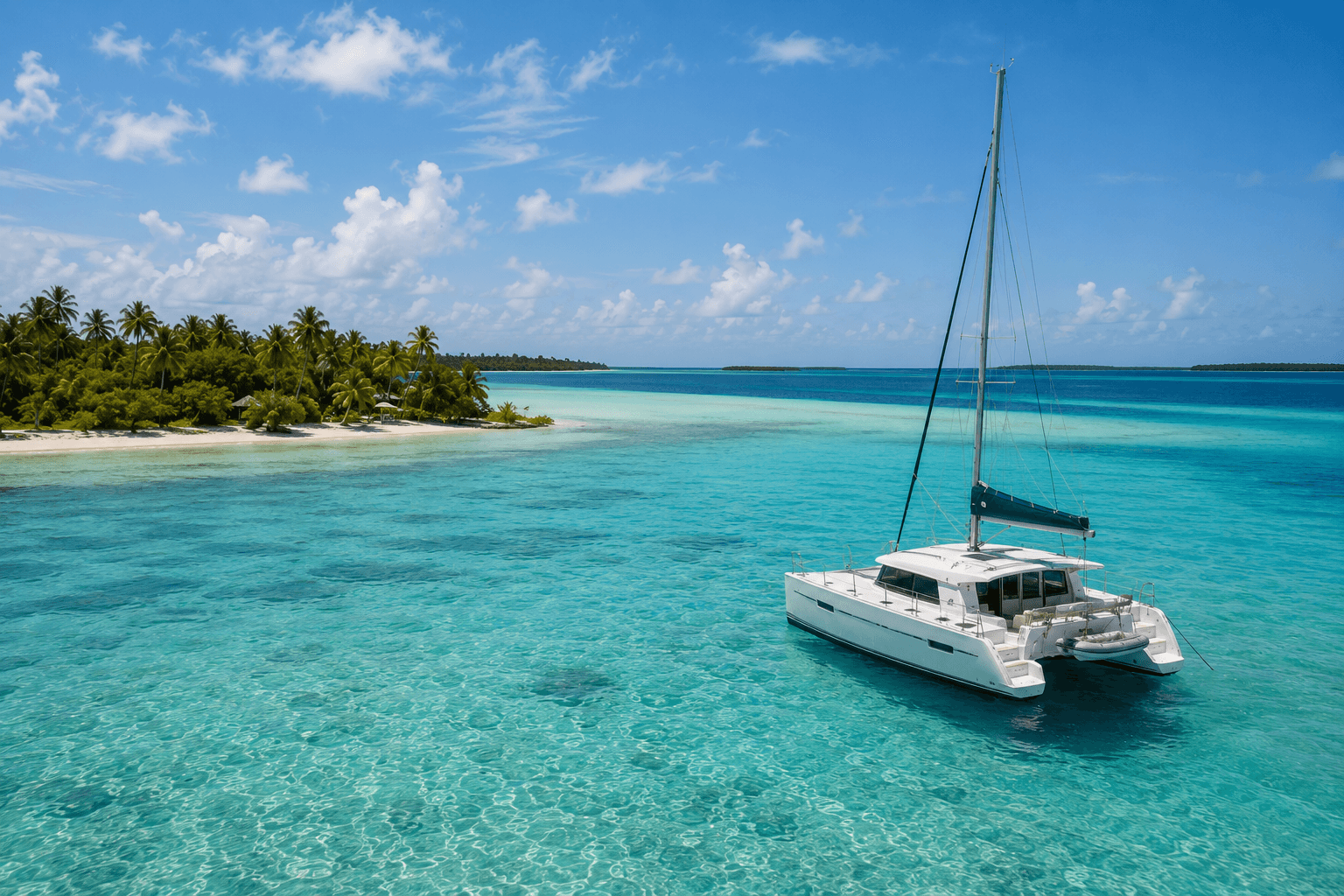
A sailing charter in Belize is not a luxury cruise with a rod holder bolted on as an afterthought. Done right, it's a mobile base camp. You anchor at Turneffe Atoll one night, wade a hard-sand flat at first light for permit, pull anchor at noon, and reach Lighthouse Reef by sunset. That's the real pitch — geography you can't access by staying in one place.
Right now it's September 2026, which means you're in the rainy season. That affects your planning. Squalls move through quickly, offshore windows are real but they close fast, and booking with a captain who checks the weather obsessively is non-negotiable this time of year. The fishing itself holds up well between systems — reef snapper, offshore grouper, and permit on Turneffe's calmer flats are all accessible. Just don't expect to lock in a date and ignore the forecast.
Crewed vs. Bareboat: Which One Actually Makes Sense
Bareboat means you captain the vessel yourself. You need documented sailing experience, a logbook, and the confidence to navigate a reef system that will absolutely hole a hull if you cut corners. Belize's barrier reef is not forgiving. If you have the credentials and experience, bareboat gives you full autonomy — you set the itinerary, you fish when and where you want.
Most people booking a sailing charter in Belize should take a crewed boat. A captain who knows these waters knows which cut through the reef is safe on a falling tide, which flat on Turneffe holds permit in September versus December, and which anchorages are protected when a system builds from the east. That local knowledge is worth more than saving a few hundred dollars on the bareboat rate.
Some operators offer a captain-only crew — you bring your own provisions and handle the boat's daily operation alongside the skipper. Others include a full crew with a chef. The crewed catamaran is the most common setup for fishing-focused sailing trips because the deck space and shallow draft suit both anchoring near flats and running to offshore structure.
The Three Atolls: Where You're Actually Going
Belize has three offshore atolls. Each fishes differently. Know which one matches your priorities before you book.
Turneffe Atoll is the closest to the mainland — roughly 20 miles east of Belize City. It's the most accessible and the most popular for permit fishing. The interior lagoon holds hard-sand flats where bonefish and permit both show. Under the current waning gibbous moon (Day 22 of the cycle), permit are transitioning back to stronger daytime feeding patterns as overnight light decreases — incoming tide windows on Turneffe's west-facing flats are worth prioritizing right now. Under Belize Fisheries Regulations, both permit and bonefish are catch-and-release only. Barbless hooks are required. No exceptions.
Lighthouse Reef sits roughly 50 miles offshore. This is the atoll with the Blue Hole at its center — a 1,000-foot-deep sinkhole that's a dive site, not a fishing spot. The real fishing at Lighthouse Reef is on the outside reef walls: grouper, snapper, and barracuda. The atoll rim itself has flats with permit and bonefish, though they see less pressure than Turneffe. Reaching Lighthouse Reef from Placencia under sail takes the better part of a day. Confirm your captain's comfort with the offshore crossing in September before committing.
Glover's Reef is the southernmost atoll, about 45 miles from Dangriga. It's a marine reserve — spiny lobster and fish take within the reserve are prohibited. The surrounding waters outside the reserve boundary still fish for snapper and grouper. Glover's sees the least boat traffic of the three and is the most exposed to southeast swells.
Sailing Out of Placencia: The Southern Route
Placencia is the most logical departure point for a sailing charter targeting the southern atolls or the reef south of Belize City. The village has a proper marina, fuel, provisioning options, and a cluster of charter operators who run everything from day sails to week-long liveaboard itineraries.
A typical week-long itinerary out of Placencia runs: Placencia → Laughing Bird Caye (day 1 anchor) → Glover's Reef outer rim (days 2–3) → north to Turneffe Atoll (days 4–5) → back toward the barrier reef cayes for the final night → return Placencia. That's ambitious for September if the weather turns. A more conservative version keeps you inside the barrier reef on rough days and pushes to the atolls only when the forecast gives you a clean window.
The inside-reef passages — the channels and cayes between the barrier reef and the mainland — are protected, calm, and full of snapper and tarpon. Tarpon in Belize are fully protected under Belize Fisheries Regulations; catch-and-release only, minimize handling time. If you're fishing inside the reef on a blown-out day, tarpon on a fly is a legitimate option and those fish don't care about the weather outside.
What Fishing Looks Like on a Sailing Charter in September
September is not the peak month for any single species in Belize. It is, however, a functional fishing month when the weather cooperates. Here's what's actually realistic:
Permit on Turneffe: Still accessible on calm days. The waning gibbous moon phase through mid-September supports daytime feeding on the flats — incoming tide is your window. Bring an 8-weight with a floating line and carry Merkin crabs and spawning crab patterns in size 2 and 4. Permit under Belize regulations are catch-and-release only; barbless hooks required.
Reef Snapper and Grouper: This is the most reliable September fishing aboard a sailing charter. Mutton snapper, lane snapper, and yellowtail hold on the reef structures throughout the rainy season. Medium-heavy spinning gear with 20–30lb braid, fluorocarbon leader, and live shrimp or cut ballyhoo gets them. Jigs work when the current is moving.
Snook: Closed season. Snook season runs October 1 through May 31 under Belize Fisheries Regulations. Do not target snook in September — the season is closed June 1 through September 30.
Barracuda: No closed season, no size minimum for sportfishing purposes. Barracuda stack up near reef structure and current edges. They hit fast-moving plugs and tube lures. Not everyone's target species, but they fight hard and they're available when other species aren't.
Spiny Lobster: The lobster season opened June 15. You can take up to 12 per person per day, minimum 3-inch carapace, no berried females, no harvest within marine reserves. A sailing charter that covers the reef and atolls can legally harvest lobster in open waters — some operators include this as part of the experience. Confirm with your captain before you start collecting.
What to Look for in a Belize Sailing Charter Operator
The captain's reef knowledge matters more than the boat's age. Ask these questions before you book:
What's the contingency plan for bad weather? In September, this is not hypothetical. An operator who says "we'll figure it out" is not the answer. You want a captain who names specific protected anchorages, alternative inside-reef routes, and has a policy for weather cancellations.
Does the charter include a fishing guide or a fishing-capable captain? A sailing captain and a flats fishing guide are different skill sets. Some crewed catamaran operations carry a dedicated fishing guide or run skiff transfers to a local guide when you're anchored near the flats. Others expect you to fish off the back of the boat at anchor. Know which one you're booking.
What's the boat's draft? Catamarans typically draw 3–4 feet. That matters for anchoring near flats. A deeper monohull has more limited access to shallow atoll water.
What provisions are included? A week offshore in September means you're not resupplying easily. A good crewed operation provides meals, drinking water, snorkeling gear, and fishing basics. Get the inclusion list in writing.
Pricing for crewed catamaran charters in Belize runs roughly $4,000–$9,000 per week for a 4–6 person group, depending on the vessel size, crew configuration, and whether a fishing guide is included. Bareboat rates are lower but require you to factor in provisioning, fuel, and marina fees separately.
Gear to Bring, Gear the Boat Provides
Most crewed sailing charters provide basic snorkeling equipment and some fishing gear — typically spinning rods rigged for reef fishing. If permit on the flats is a priority, bring your own fly setup. Don't assume the boat has an 8-weight rigged with a quality floating line and a selection of crab patterns.
Bring yourself:
- 8-weight fly rod, fast action, with reel loaded with floating line and 50+ yards of backing
- Crab patterns: Merkin (tan and olive), Spawning Crab, EP Spawning Crab, sizes 2–4
- Barbless hooks — required for permit and bonefish in Belizean waters
- Polarized sunglasses — non-negotiable for spotting fish on flats
- Sun protection: long-sleeve UPF shirt, buff, wide-brim hat
- Spinning rod (medium-heavy, 7'), 30lb braid, 25lb fluorocarbon leader for reef fishing
Confirm with the operator:
- Spinning rods and bait for reef snapper (most crewed charters include this)
- Fish cleaning and storage capability
- Dive/snorkel gear
- Safety equipment and offshore communication (SSB radio or satellite communicator — important in September)
September-Specific Planning Notes
Book with flexibility. A 7-night sailing charter that departs on a fixed date with a rigid atoll-to-atoll itinerary is a setup for frustration in September. The best operators structure the week with primary and fallback options — if the offshore crossing to Lighthouse Reef looks rough on day three, you fish the inside reef and try again on day four.
Squalls typically build in the afternoon. Morning departures and early anchor sets give you the best fishing light and allow you to be settled before afternoon weather builds. Captains who operate year-round in Belize know this rhythm and plan around it.
Sea surface temperatures in September run around 84–86°F. That's warm enough to keep reef fish active but hot enough that midday flats fishing is slow — fish seek depth and shade. First light on the flats is your most productive window. Plan the itinerary so you're near fish-able flats at dawn, not motoring toward them.