
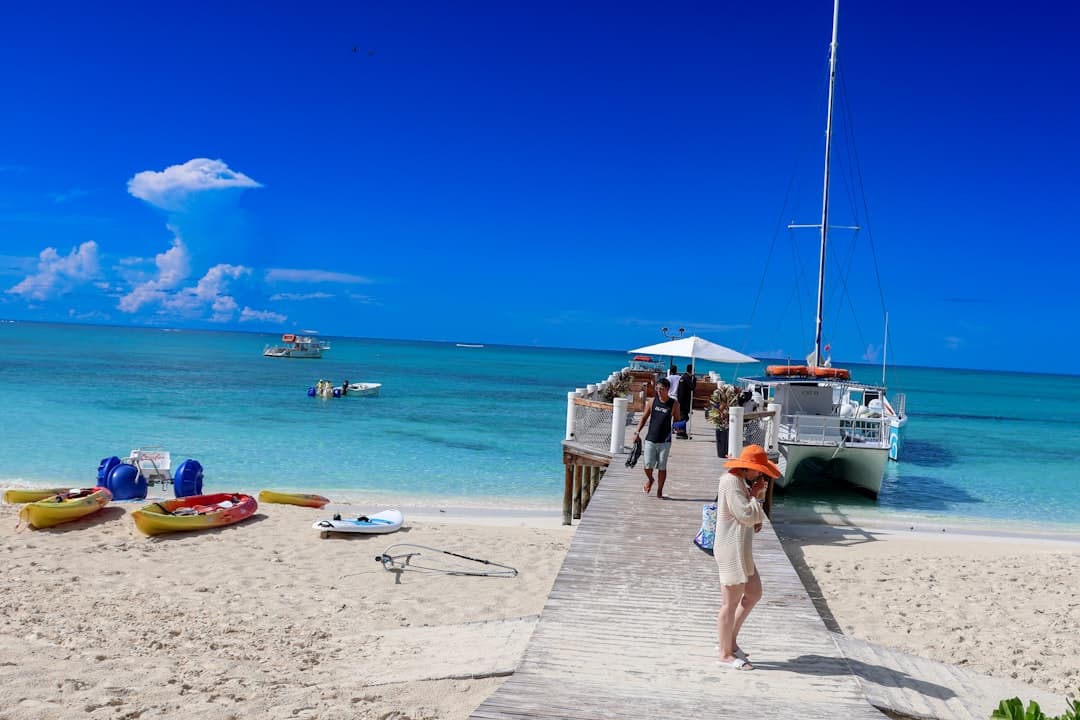

From the Dock
Summer heat is pushing fish deeper across Turks & Caicos right now—offshore and deep-drop trips are consistently outperforming flats work. This eco tour focuses on reef and shallow-water species, so expect strong sightings of sea turtles, nurse sharks, and reef fish as September conditions stabilize the water column.
A Turks & Caicos eco tour boat puts you on one of the most productive marine environments in the Caribbean — shallow limestone flats, dense red mangrove systems, and protected cays that hold everything from Critically Endangered rock iguanas to juvenile sea turtles. The activity itself ranges from paddling a clear-bottomed kayak through a mangrove creek to riding a near-silent electric vessel across the Caicos Bank. What you see depends on where you go, who runs the boat, and what time of day you launch. This guide gives you the specifics to make that call.
What Eco Tour Formats Are Available in TCI
Turks & Caicos operators run four primary eco tour formats, and they are not interchangeable. Know what you're booking before you pay.
Clear kayak tours put you in a transparent hull so you can watch the bottom pass beneath you — reef fish, conch, and turtle grass beds are visible in water as shallow as two feet. Most departures are from Providenciales on the northwest side of the island, pushing toward the mangrove systems near Frenchman's Creek or east toward Leeward Channel.
Electric boat eco tours carry four to eight passengers on a low-wake, low-noise vessel. These work better for families with young kids or anyone who doesn't want to paddle. The quiet motor is the point — you get close to wildlife that would scatter from a gas outboard. Operators typically run these around the cays north of Provo and into Princess Alexandra National Park.
Mangrove kayak and SUP tours go deeper into the root systems — single or double kayaks and stand-up paddleboards that can navigate channels too narrow for any motorized vessel. These require basic paddling ability and a decent sense of balance on the SUP. Half-day and full-day options exist.
Little Water Cay iguana tours are a specific, short-format trip — usually one to two hours round trip by small boat — landing on a protected cay to walk a boardwalk through the habitat of the Turks & Caicos rock iguana (Cyclura caicosensis). The island is a protected nature reserve managed under TCI law. Guides are required. You do not walk the cay unescorted.
September Conditions: What to Expect Right Now
September is deep into hurricane season, and TCI operators are watching the National Hurricane Center closely. That's the first honest thing to know. The second: when the weather cooperates, eco tours still run, and the water conditions can be genuinely good — calm mornings before afternoon convection builds, water visibility that holds well in protected areas, and mangrove channels that are shaded and relatively cool even when air temps push toward 90°F.
Sea surface temperatures in September 2026 are running above 86°F across the Caicos Bank. This affects marine life behavior. Green turtles remain active in the shallows — they're not temperature-limited the way bonefish are. Stingrays hold in their usual sand-bottom resting spots. The iguanas on Little Water Cay are present year-round; they're reptiles and they're doing exactly what September iguanas do in the tropics.
The practical concern is scheduling. Book morning departures. By 1 PM in September, squall lines can develop quickly over the Caicos Bank, and responsible operators cancel or return early when lightning is within range. Most reputable eco tour companies monitor conditions from the night before and communicate cancellations by 7 AM. Ask about rescheduling policy before you book — September weather is variable enough that you want flexibility built in.
Shoulder-season upside: September is not peak tourist season. Group sizes are smaller. Some operators are more willing to customize a route or extend a tour if demand is low. If you're already on the island and the weather window opens, it's a better time to go than you might expect.
Little Water Cay: The Iguana Tour Breakdown
Little Water Cay sits at the eastern tip of Providenciales, inside Princess Alexandra National Park. It holds the largest population of Turks & Caicos rock iguanas in the country — estimates run into the hundreds. The species is Critically Endangered, and the island is one of the reasons population numbers have stabilized.
The tour itself: a short boat crossing from Leeward Marina or a nearby launch point, then a guided walk on a raised boardwalk through the cay's interior. The iguanas are accustomed to human presence and will approach. Feeding them is prohibited. Photography is wide open — these animals will sit three feet from your lens without moving.
Guides narrate the conservation context: why the species is endangered, what the main threats are (habitat loss, introduced predators, invasive rats), and what TCI's Department of Environment and Coastal Resources (DECR) has done to protect the cay. Good operators make this feel like a real briefing, not a scripted loop.
Trip duration: 1.5 to 2.5 hours total including transit. Works for ages six and up. No significant physical demands — flat boardwalk, short walk. Bring reef-safe sunscreen and water. There is no shade on the crossing.
Mangrove Tour Routes: Where Operators Actually Go
The mangrove systems most commonly accessed from Providenciales are along the north shore toward Frenchman's Creek, the mangrove channels inside Princess Alexandra National Park, and the tidal creeks running off the back side of the Caicos Bank near the cut between North Caicos and Provo.
Frenchman's Creek is the most accessible for kayak operators running out of Grace Bay or the Leeward area. The creek meanders through red mangrove prop roots for roughly a mile before opening onto a small lagoon. At mid-tide incoming, water depth is 2.5 to 4 feet in the main channel. At low tide, sections become too shallow to paddle without dragging your hull — which is exactly why tide timing matters. Ask your operator what time they're launching relative to the tide. If they can't answer that question specifically, that tells you something.
The mangroves in this system hold juvenile snappers, small barracuda, and the occasional juvenile nurse shark resting under the roots. You'll see hermit crabs, sally lightfoot crabs, and if you're quiet and watching the surface, the occasional tarpon rolling in the deeper pools — though September tarpon activity is more consistently found nearshore and offshore, not deep in the creeks.
Princess Alexandra National Park channels are shallower and more photogenic — open-water passages between mangrove islands where you can see the bottom clearly throughout. Electric boat tours favor these routes because the wider channels accommodate the vessel and the quiet motor means wildlife holds rather than scatters.
Clear Kayak Tours: What They Actually Deliver
A clear kayak is a polycarbonate hull — typically an Ocean Kayak or similar stable recreational design — with a transparent bottom panel. It works. The novelty is real: paddling over a coral patch in three feet of water while watching a French angelfish move beneath you is a genuinely different experience than viewing from above.
Tempered expectations: water clarity directly affects visibility. In September, after summer swells and higher biological activity, visibility in the shallows can be slightly reduced compared to the January–April window. You'll still see bottom in most areas the operators use — these routes are selected specifically because they stay clear. But if you're expecting Caribbean visibility after a week of post-storm chop, it may not be the best day for it.
Stable hull designs make these accessible to anyone who's paddled a recreational kayak before. Double configurations are available for couples or a parent with a young child. Most operators run tours of 90 minutes to three hours. Guides lead the route and point out specific species — they know what's down there and where it tends to sit.
Bring polarized sunglasses. They cut the surface glare and you'll see twice as much through the hull.
Stand-Up Paddleboarding in TCI: What's Worth Knowing
SUP eco tours in Turks & Caicos are best suited to protected water — the inside of Chalk Sound, Princess Alexandra Park channels, or the calm lagoon sections off Provo's north shore. Open-water SUP on the Atlantic side of the island in September is not what these tours offer, and for good reason: wind chop and a period swell make it work, not recreation.
Calm mornings in September can offer flat-water paddling that's hard to beat. The challenge is that September mornings are reliably calm until about 10 AM, then trades pick up and surface conditions change. Good SUP tour operators launch at 7 or 7:30 AM specifically to use that window. Tours that launch at 10 AM in September are leaving you exposed to building conditions.
For complete beginners, a clear kayak tour is easier. SUP requires balance and some core engagement — fine for most adults, harder with young children. Some operators offer hybrid tours where the group can mix SUPs and kayaks on the same route.
Chalk Sound National Park on Provo's southwest side is arguably the best SUP environment on the island: a shallow, landlocked lagoon with hundreds of small limestone cays, vivid green water from the bottom composition, and almost no boat traffic. Not all eco tour operators access Chalk Sound — it's a longer drive from Grace Bay and requires a different launch point. Worth asking specifically if that's where you want to go.
Marine Protected Areas: Rules You Need to Know
Several of the most-visited eco tour sites in TCI fall inside Marine Protected Areas managed by the DECR. Princess Alexandra National Park, Chalk Sound National Park, and the waters around Little Water Cay all carry specific regulations that operators are required to follow — and that apply to you as a visitor.
Key rules relevant to eco tour participants:
Queen conch: You may not collect conch inside any designated Marine Protected Area. Outside MPAs, sport fishing regulations allow five per person per day with a minimum 3/4-inch lip thickness — but eco tours are observation trips, not harvest trips. Leave them on the bottom.
Sea turtles: Fully protected under TCI law. Do not touch, chase, or block the path of any sea turtle. Guides will tell you to observe from a distance and let the animal set the terms of the encounter.
Iguanas: Feeding prohibited on Little Water Cay. Approaching within a few feet is fine — they're used to it — but keep your hands to yourself.
Anchoring: Within MPAs, operators use moorings or pole-and-stake. No anchoring on coral. Reputable operators already know this. If you watch a captain drop a hook on a coral head, that's a problem worth mentioning to TCI DECR.
The broader point: these protections are why the ecosystems you're touring are still worth seeing. TCI has done real work on its MPA network, and the results show in the health of the reefs and mangroves compared to neighboring islands with weaker enforcement.
How to Pick an Eco Tour Operator in TCI
The main variables that separate a good eco tour from a mediocre one in Turks & Caicos:
Guide knowledge. The guide is the product. On a two-hour kayak tour, the difference between a guide who can identify every species you encounter and narrate the ecological connections versus one who paddles ahead and waits for you is enormous. Ask operators directly: are guides naturalists, or are they primarily boat handlers? Both have a place, but you should know what you're getting.
Group size. Smaller is better. Groups of four to six people move through mangrove channels more quietly, have more access to guide attention, and cause less disturbance to wildlife. Groups of twelve crammed into a convoy of kayaks are a different product. Maximum group size is a legitimate question to ask before booking.
Tide-specific scheduling. Any operator running mangrove tours should be able to tell you exactly why they chose their launch time relative to the tide. If the answer is vague, the operator either doesn't prioritize this or doesn't know. Both are red flags.
Hurricane season flexibility. In September, cancellation and rebooking policy matters. Confirm before you pay: same-day cancellations due to weather should result in a full refund or a guaranteed reschedule, not a credit that expires in 30 days.
Reef-safe sunscreen requirement. Reputable eco tour operators in TCI require or strongly encourage reef-safe (oxybenzone-free, octinoxate-free) sunscreen. Some provide it. If an operator doesn't mention it at all, that's a data point on how seriously they take the environmental mission of the tour.