

From the Dock
Fall transition is underway as September water temps drop—redfish and snook are moving inshore, making this peak season for sight-fishing the shallows. The nine species covered in this guide, from bottlenose dolphin to roseate spoonbill, concentrate in these transitional zones, and Charted Waters is expanding its independent captain network across this region to meet the demand.
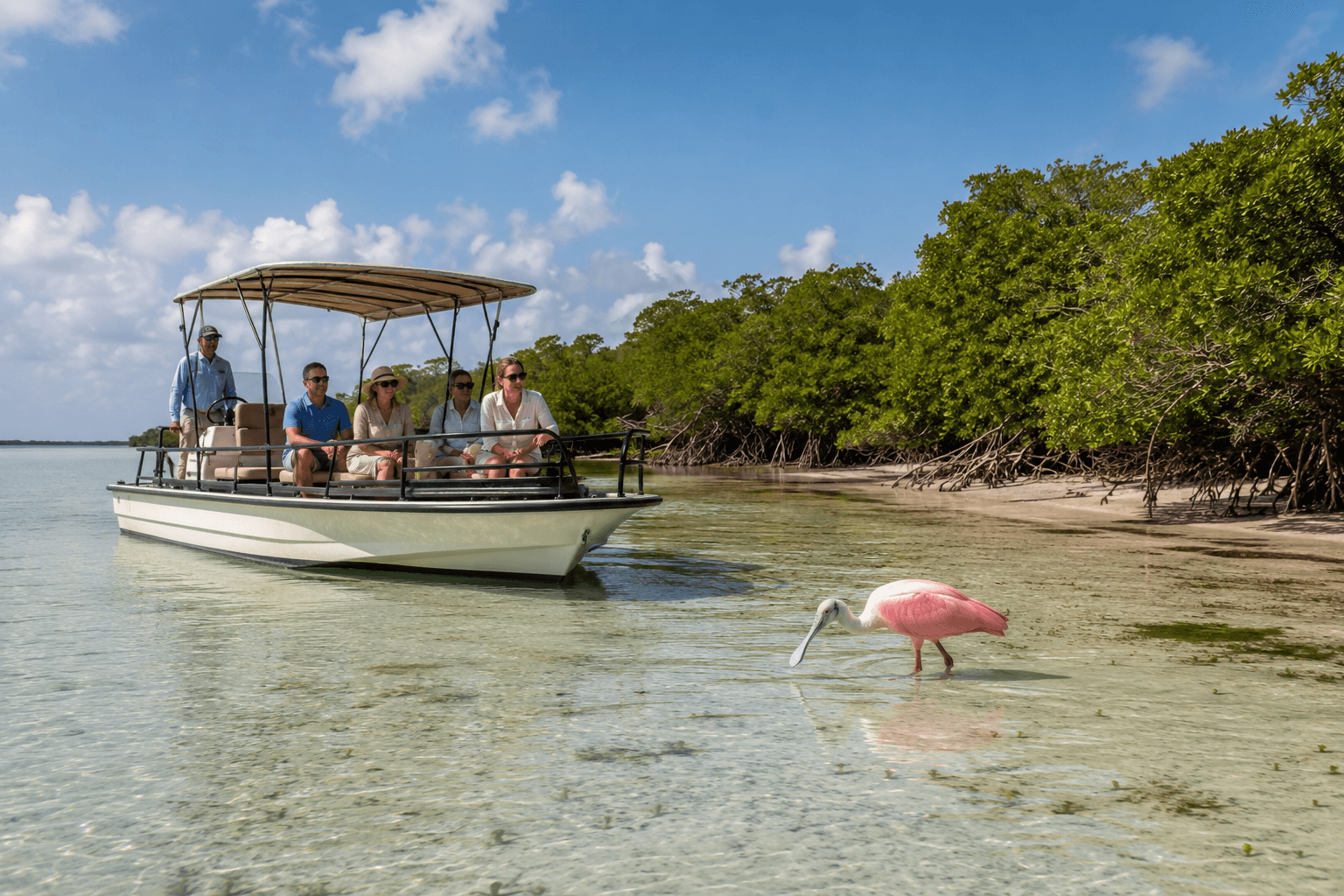
An eco tour boat is a small-group vessel — typically 6 to 20 passengers — operated by a captain or naturalist guide who takes you into shallow coastal habitat: mangrove creeks, seagrass flats, barrier island shorelines, and tidal marshes. The goal is wildlife observation, not harvest. No fishing rods, no coolers of beer. Just a slow-moving boat, a knowledgeable guide, and whatever is actually out there that day.
Right now in September 2026, the timing is genuinely good. Water temperatures are starting to pull back from summer highs across the Gulf and Southeast Atlantic coast. Manatees are still active in warm shallows before they push toward winter aggregation sites. Roseate spoonbills and wading birds are returning to Florida estuaries. Redfish are schooling up in grass flats — you'll see their wakes and tailing fish from the boat even on a non-fishing trip. It's one of the better wildlife windows of the year, and the crowds from peak summer have thinned out.
What Makes a Good Eco Tour Boat Captain
The captain is the whole product. A good eco tour operator knows the tide schedule, knows where the manatees were yesterday, and knows when to cut the engine and drift. A bad one runs the same GPS waypoints at full throttle and narrates from a printed laminated card.
Look for these specifics when you're evaluating operators:
Vessel size. Smaller is better for wildlife. A 24-foot flats-style skiff or a shallow-draft pontoon gets into mangrove tunnels and seagrass channels that a 40-foot catamaran cannot touch. Bigger boats equal more distance from the animals.
Group size. Six to eight people is ideal. Twelve is manageable. Anything above that starts to feel like a bus tour on water.
Captain credentials. USCG-licensed captain at minimum. Look for naturalist training, local marine center affiliations, or guides who have been running the same waters for multiple seasons. Longevity matters — a captain who has been in Tampa Bay for 15 years knows behavioral patterns no textbook covers.
Wildlife approach policy. Responsible operators maintain legal distance from marine mammals (100 yards for most cetaceans under MMPA guidelines), don't chase or encircle dolphins, and don't anchor over seagrass. Ask directly. If the captain shrugs, book someone else.
Florida Keys: Mangroves, Manatees, and Backcountry Flats
The Florida Keys are the most ecologically dense eco tour destination in the continental United States. You have three distinct systems within short boat range: the backcountry mangrove islands of Florida Bay, the Atlantic side seagrass beds, and the flats that connect them.
In September, manatees are still present in warm, shallow tidal creeks — particularly around Islamorada and Key Largo where freshwater springs and warm bay water keep them comfortable. Tarpon are finishing their summer run. Roseate spoonbills are showing up again on exposed mudflats at low tide.
The backcountry — accessible from Flamingo, Everglades City, or the upper Keys — is where the real wildlife density lives. Expect osprey, great blue heron, snowy egrets, and if conditions are right, American crocodiles near the saltwater-freshwater transition zones. This is not a petting zoo. You're floating through working habitat.
Key logistics for the Keys:
- Most eco tours run 2–3 hours. Half-day is enough to cover meaningful ground.
- Morning departures (7–9 AM) have calmer winds and better light for spotting.
- Tipping the captain $20–$30 per adult is standard and appreciated.
- Bring polarized sunglasses. You'll see redfish tailing in the grass from the boat and wish you had a rod — that's by design.
Tampa Bay: Dolphins, Rays, and Seagrass Recovery
Tampa Bay is a genuine conservation success story, and a good eco tour captain will tell you that without being preachy about it. Seagrass coverage in the bay hit a 40-year high recently, and the wildlife response has been measurable — more bottlenose dolphins, more manatees, more snook and redfish in the shallows.
Bottlenose dolphins are the headline here. They're resident year-round, but fall is a strong feeding period as they follow schools of mullet and pinfish through the grass flats. A skilled captain positions the boat so the dolphins move toward you rather than away — that's the difference between a wildlife experience and a chase.
Manatees are concentrated now in September near warm-water discharge areas — particularly around the power plant outflows in Apollo Beach and the spring-fed tributaries on the bay's eastern shore. Once water temps drop below 68°F, they'll aggregate in larger groups. Right now they're still spread out and easier to observe in smaller numbers without the crowd.
What to know before booking Tampa Bay:
- Departure marinas range from St. Pete Beach to Safety Harbor. Location affects which part of the bay you access.
- Some operators combine a dolphin tour with a shelling stop on a sandbar. Fine for families, but you'll cover less productive wildlife water.
- Water clarity varies by wind and tide. Ask the captain when they last had good visibility.
Charleston and the South Carolina Lowcountry: Tidal Creeks and Bird Life
Charleston's eco tour scene runs on a different rhythm than Florida's. The Lowcountry is defined by tidal marsh — vast grids of Spartina grass cut by dark, tannin-stained creeks that drain into the Atlantic through barrier island inlets.
The wildlife calendar here leans heavily toward birds. Brown pelicans cruise the inlets. Reddish egrets stalk the exposed mudflats at low tide. Bottlenose dolphins work the creek mouths. In October and November you'll start picking up migrating shorebirds — willets, dowitchers, dunlin — moving south along the coast.
Loggerhead sea turtles are still active in the nearshore Atlantic in September. Some Charleston operators run combination trips that cover both the tidal creeks and a slow run along the barrier island beaches where turtles are sometimes spotted near the surface.
The tidal range in Charleston is significant — six to eight feet on a normal day. This matters for eco tours. A creek that's navigable at high tide is a mud flat at low. Book with a captain who plans the route around the tide table, not just the departure time.
Barrier islands accessible by eco tour from Charleston include Capers Island, Debidue Beach, and portions of Cape Romain National Wildlife Refuge. Some of these have no road access at all. The boat is the only way in.
Other US Destinations Worth Your Attention
Chesapeake Bay, Maryland/Virginia. The bay in fall is excellent. Osprey are still present before their southward migration. Blue crabs are active. Some operators run combo trips covering crabbing demonstrations alongside wildlife observation — useful for families with kids.
Pacific Northwest: Puget Sound and San Juan Islands. Orca and humpback whale watching runs May through October. September is a strong month — chinook salmon runs are still occurring, and resident orca pods follow the fish. Cold water, gray skies, massive marine mammals. Completely different experience from the Gulf Coast.
Gulf Coast Mississippi and Alabama. Less trafficked than Florida but productive. Pontchartrain Basin tours out of Louisiana cover alligator habitat and wading bird colonies. Mobile Bay has resident dolphin populations and some of the best undisturbed marsh on the Gulf.
Outer Banks, North Carolina. Wild horse tours by boat on the barrier islands (Currituck Sound side) are a legitimate draw. September is still warm enough for comfortable water, and the horses are reliably present on the sound-side beaches.
What to Bring on a US Eco Tour Boat
Most captains provide the boat, the local knowledge, and sometimes a pair of binoculars. Everything else is on you.
Non-negotiable:
- Polarized sunglasses. Not optional. You won't see fish, rays, or turtles in the water without them.
- Sun protection. On a 3-hour morning tour in September, Gulf Coast UV is still strong. Hat, long sleeves, reef-safe sunscreen.
- Water. Bring more than you think you need.
- Closed-toe shoes or boat shoes. Some operators allow bare feet; some don't. Flip-flops are acceptable but can be a problem on wet decks.
Useful additions:
- 8x42 binoculars. Compact enough to stow, powerful enough to identify a spoonbill at 200 yards.
- Waterproof phone case or a dry bag for your camera.
- Light jacket for early morning departures, especially September in the Carolinas or the Pacific Northwest.
Leave at the dock:
- Fishing rods (unless the tour explicitly includes fishing — some do).
- Loud speakers. You're in wildlife habitat.
- Pets, in most cases. Ask in advance — very few eco tour operators allow dogs aboard.
How to Read an Eco Tour Listing Before You Book
Not every operator calling themselves an 'eco tour' is running a legitimate wildlife-focused trip. Some are dolphin tours with a nature label slapped on. A few are glorified sightseeing cruises with bigger boats and less wildlife access. Here's how to sort them out quickly.
Check the vessel. If the boat holds 40 people, it's not going anywhere interesting. Look for small-group operations — 12 passengers maximum for anything claiming wildlife immersion.
Read the itinerary specifically. Generic phrases like 'explore coastal beauty' tell you nothing. A good operator says 'we run the mangrove tunnels north of the marina on the incoming tide and work the grass flats on the way back.' Specific geography means the captain actually has a plan.
Ask about the captain's background. Years on the water, local certifications, any naturalist affiliations. A captain who has spent 10 seasons in the same estuary has pattern recognition you can't buy from a training course.
Verify the cancellation policy before you pay. Hurricane season runs through November. In September especially, conditions can change fast. A captain who operates with integrity will offer a weather cancellation window without penalty. Get this in writing before you hand over a deposit.
Understand what's included. Most eco tours don't include gratuity, snacks, or gear beyond the basics. Know what you're paying for and what's extra.