

From the Dock
Fall transition is here in September 2026, and redfish and snook are moving inshore as water cools—this is peak timing for both species along the U.S. coast. The guide network is still expanding in this region, but the fishery itself is solid across redfish, snook, tarpon, and the full saltwater and freshwater species list covered in this article.
Right now — September 2026 — is one of the best windows of the year to fish the United States coast. Water temperatures are dropping off summer highs. Redfish are stacking on grass flats and oyster bars across the Gulf. Snook are transitioning from their summer haunts and moving inshore as the Atlantic coast open season runs through November 30. Offshore, mahi-mahi and kingfish are active. The moon is in a waning gibbous phase, which traditionally pushes flats species toward stronger daytime feeding — particularly permit, which respond well to incoming tide during this lunar window. If you've been waiting for the right moment to book, this is it. Hurricane season is still active, so check the forecast 72 hours before departure and confirm your captain has a cancellation policy in writing.
The US Fishing Landscape: What You're Actually Dealing With
The continental United States touches three major fisheries: the Atlantic coast, the Gulf of Mexico, and the Pacific coast. Add the Great Lakes, major river systems, and interior freshwater — you have more fishable water than any one angler can realistically cover. That's the opportunity. The complication is that regulations vary by state, by species, by season, and by whether you're in state or federal waters. The license and bag limit that applies in Florida doesn't apply in Texas or North Carolina. Always confirm current rules with your captain before the trip. Charted Waters operators are required to know this — it's their license on the line, not yours. For this guide, regulation references reflect current FWC rules where Florida-specific species are discussed.
Gulf Coast: Inshore Fishing Right Now
The Gulf Coast from Corpus Christi to the Florida Panhandle is the center of gravity for US inshore fishing in the fall. Redfish are the primary target September through November. They school up in large numbers on grass flats, around oyster bars, and near marsh drains as baitfish concentrate ahead of cooling water. Gold spoons and soft plastic paddle tails on a 1/4 oz jighead are the workhorses. Live finger mullet is better if you can get it. In Louisiana and Texas, sight fishing to tailing redfish on shallow flats is legitimate through October. Florida adds snook to the equation. The Atlantic coast and Keys snook season is open September 1 through November 30 — slot limit is 28–33 inches total length, one fish per person per day per FWC. Anything outside that slot goes back. Captain runs a 17- to 21-foot skiff? You're looking at a half-day rate in the $400–$600 range for two anglers across most Gulf markets. Full-day jumps to $700–$1,000 depending on the operation and target species.
Florida Keys and South Florida: Flats and Offshore
South Florida is a year-round fishery, but fall specifically sets up well for permit on the flats. Permit don't have a closed season in Florida, and the current waning gibbous moon phase is historically productive — fish are feeding actively during daylight hours on incoming tides, which is exactly when a skilled flats guide can put you in range. Bring crab imitations if you're fly fishing; live crabs under a popping cork work on spinning gear. Permit bag limit is two fish per person per day in state Atlantic waters, 11-inch minimum. The Keys also produce mahi-mahi as boats run offshore to color changes and weed lines. Mahi are schooling fish — if you find one, keep a hooked fish in the water and the school stays close. Limit is 10 fish per person per day, 20-inch fork length minimum. Gag grouper season is open through December 31 — three per person per day, 24-inch total length minimum, no more than two may be gag in a combined grouper bag. Season closes January 1, so fall trips have a clear window. Tarpon are present year-round in South Florida but peak action is spring through early summer. Fish encountered now are resident fish, not migratory schools. If a tarpon is harvested, it requires a $50 FWC Tarpon Harvest Tag and must be 75 inches or longer. Nearly every captain releases them — the fish is worth far more in the water.
Atlantic Coast: Stripers and Offshore Action
From the Carolinas north, the fall striper run is the headline event. Striped bass follow baitfish — bunker (Atlantic menhaden) and herring — south as water cools. The run builds through October and peaks in November from the Outer Banks to New Jersey. Charter captains run chunking, trolling with umbrella rigs, or live-lining bunker depending on conditions and how fish are positioned. The surf also fires up — Hatteras and Montauk get serious attention from shore-based anglers during the migration. Offshore from Hatteras, dolphin (mahi-mahi) and wahoo are in the mix through October. Wahoo minimum is 33 inches fork length, two per person per day. These fish are fast — wire leader or heavy fluorocarbon above 100 lb is standard on high-speed trolling spreads.
West Coast and Pacific Northwest: Salmon and Halibut
Pacific salmon fishing peaks in late summer and early fall. Chinook (king) salmon runs depend heavily on specific river systems — the Columbia, the Klamath, the Sacramento — and run timing varies by river and year. Coho salmon follow close behind. For offshore Pacific fishing, halibut is the premier bottom species from California north through Washington and into Alaska charters. California halibut have separate state regulations from Pacific halibut managed federally — confirm with your captain which fish and which waters you're targeting. Saltwater rockfish (lingcod, cabezon, various rockfish species) fill out Pacific coast offshore trips. Regulations on rockfish are strict and frequently updated by NOAA — a licensed charter captain operating in these waters manages the compliance. That's a key reason to book through a licensed operator rather than fishing from a rental boat.
Freshwater Fishing in the United States
Freshwater fishing in the US is its own world. The Great Lakes produce trophy walleye, lake trout, steelhead, and salmon — Lake Michigan's fall chinook fishing out of ports like Ludington and Frankfort runs through October. Largemouth and smallmouth bass dominate the interior South and Midwest, with fall transition producing aggressive feeding as water cools into the 60s. The Mississippi and its tributaries hold catfish that require heavy tackle and patience. In the Mountain West, trout fishing on tailwaters — the Green River in Utah, the San Juan in New Mexico, the Madison in Montana — holds through fall and winter. Water temps stay consistent below dams, which keeps fish active and feeding on midges and nymphs long after freestone streams go low and clear. If you're specifically targeting freshwater fly fishing, the fly fishing guide covers that in more depth.
Choosing the Right Charter: What to Look For
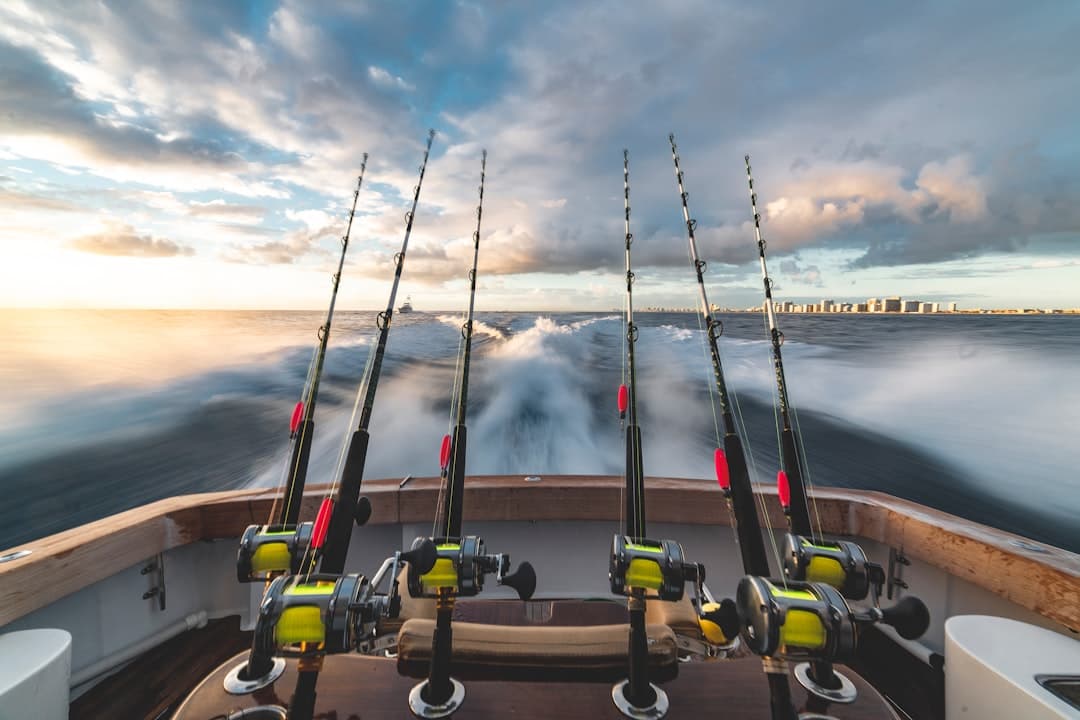
A US fishing charter license is issued by the US Coast Guard — it's called a USCG Merchant Mariner Credential with a captain's endorsement, commonly called a '6-pack license' for vessels carrying up to six paying passengers. That license is the baseline. It doesn't tell you if the captain is good at finding fish. Here's what does: ask the captain where they specifically fished last week, what species they targeted, and what worked. A good captain answers without hesitation. A weak one gives you a brochure answer. Trip types to understand: inshore (flats, bays, estuaries — typically half or full day on a smaller skiff), nearshore (out to 9 miles, a step up in boat size, targeting kingfish, cobia, shark), and offshore (beyond 9 miles, targeting mahi, wahoo, grouper, tuna — requires a larger vessel and more fuel). Offshore trips run longer — plan for 8–12 hours. Rates scale accordingly: $800–$1,500 for nearshore, $1,200–$2,500+ for full-day offshore depending on fuel costs, region, and boat. Captain provides rods, tackle, bait, and ice in most markets. Ask specifically about what's included before you book. Some offshore charters don't include bait — that's a separate cost.
Licenses, Regulations, and What the Captain Handles
On a federally licensed charter, the captain's license typically covers passengers for recreational fishing — you don't need a separate federal saltwater license as a paying passenger. State licenses are a different matter. Some states require a separate state license even on a charter; others don't. Florida, for example, includes passengers under the captain's vessel license for most saltwater trips, but rules vary. Ask your captain directly. The regulations listed in this guide reflect current FWC rules for Florida state waters. For trips in other states — Texas, North Carolina, Louisiana, California — the captain operating in those waters is the authoritative source. Don't rely on generic online information for bag limits or seasons. Regulations change seasonally and the captain's license depends on running a clean, compliant trip.
What to Bring on a US Fishing Charter
The captain brings the rods, reels, and terminal tackle. You bring the rest. Polarized sunglasses are non-negotiable — you cannot sight fish without them, and they protect your eyes from hooks. Sun protection: long-sleeve UV shirts, a buff, a wide-brim hat. The sun on the water is significantly more intense than on land. Snacks and water — most captains provide a cooler but not food. Dramamine if you're prone to motion sickness — take it the night before for offshore trips, not the morning of. Rubber-soled, non-marking shoes. Bare feet or dark-soled shoes damage boat decks and grip poorly on wet fiberglass. Camera or phone in a waterproof case. If you're offshore, add a light jacket for the run home — wind chill at 25 knots is significant even in warm weather.