
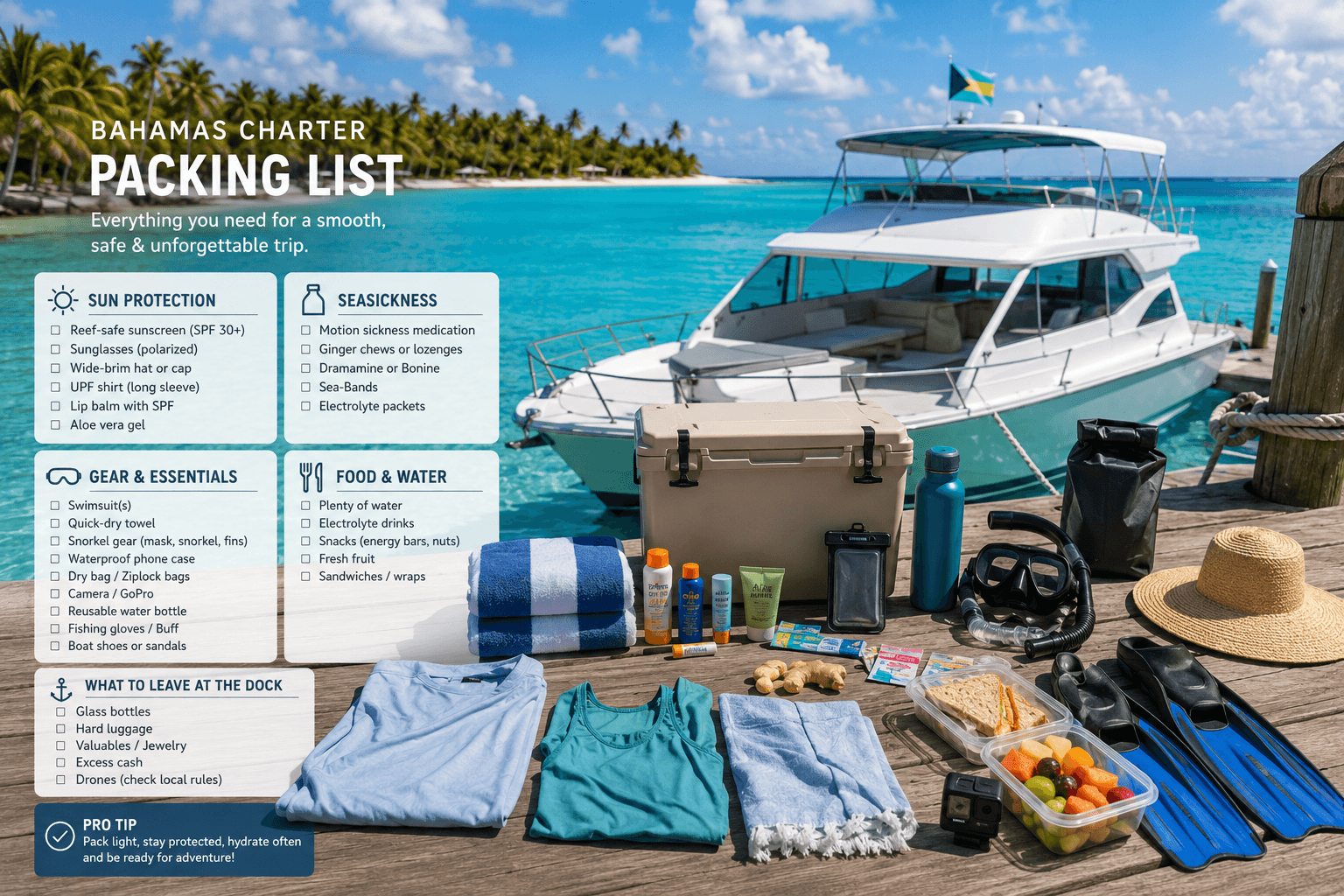

From the Dock
September in this region means deep water is producing. Full-day charters dominate the bookings for good reason—offshore and deep-drop trips are outperforming shallower grounds as summer heat pushes the bite deeper. Pack accordingly for mahi-mahi, wahoo, grouper, and snapper; a growing number of independent captains are running these trips daily, and they'll tell you what didn't make the cut on the boat comes back to the dock.
September in the Bahamas means water temperatures above 86°F, active hurricane season, and captains running offshore, deep-drop, and nearshore tarpon trips more than anything else. Bonefish have pushed off the shallow flats into deeper, cooler water — most experienced operators aren't booking serious flats trips right now. That seasonal reality matters for your packing list. Offshore and deep-drop trips have different demands than a half-day wading session on the Marls. This guide accounts for both, and flags where the lists diverge.
What Your Captain Already Provides
Before you overthink your duffel bag, know what's already on the boat. For the vast majority of Bahamas charter fishing trips — full-day offshore, half-day reef, bonefishing, or deep-drop — your captain supplies: rods, reels, terminal tackle, bait or lures, and ice for your catch. Most operators also hold the required Bahamas fishing licenses for their clients, so recreational anglers fishing on a licensed charter boat do not need to purchase a separate individual permit. Confirm this with your captain when you book — some operators handle it, a few don't. Do not assume either way.
What captains do not provide: your sun protection, your seasickness medication, your food and drinks for the day, and your personal ID. Those are your responsibility, and skipping any of them will wreck your trip faster than bad weather.
The Non-Negotiables
These items belong in your bag regardless of trip type, duration, or time of year:
Reef-safe sunscreen, SPF 50 or higher. September sun in the Bahamas is direct, relentless, and reflected off the water. Apply before you board. Bring more than you think you need. The Bahamas prohibits oxybenzone and octinoxate — use mineral-based (zinc oxide or titanium dioxide) formulas only. This is enforced at some marinas.
Polarized sunglasses. Non-negotiable on the water. Polarized lenses cut surface glare and let you actually see structure, baitfish, and fish on the flats. Cheap non-polarized sunglasses are worse than nothing — they just make your eyes more comfortable while you miss everything.
A hat with a full brim. A trucker cap isn't enough. You want coverage on your ears and neck. Sun damage accumulates fast on half-day and full-day trips, especially in September when the sun is still high.
Valid government-issued photo ID. Required to clear customs if your trip crosses Bahamian waters from a U.S. departure point. Required for any marina check-in that collects passenger information. Bring a physical copy — don't rely on your phone.
Cash in small bills. Tipping your captain and mate in cash is standard. A 15–20% gratuity is the baseline for a solid trip. Plan for it before you board, not after.
Clothing and Footwear
Shoes: Wear soft-soled, non-marking shoes. Hard rubber soles, boat shoes, or deck sneakers work fine. No bare feet on offshore boats — hooks, gaffs, and wet fiberglass make that a bad idea. For bonefishing or flats wading (less common right now in September, but some tarpon and permit trips still access skinny water), lightweight wading sandals or quick-dry sneakers with grippy soles are better than deck shoes.
Layers for the return trip: Offshore in September, you leave the dock in heat and humidity. Four to six hours later, running home at 25 knots with wet clothes, the wind cuts. Throw a long-sleeve quick-dry shirt or a light windbreaker in your bag. Merino wool or synthetic is better than cotton — cotton stays wet and cold.
Pants or shorts: Quick-dry fishing pants offer sun protection without bulk. UPF-rated fabric is worth it on full-day trips. If you're just doing a half-day reef trip, board shorts are fine — just bring that long-sleeve layer.
Rain gear: Hurricane season. September is the peak of it. A packable rain jacket takes up almost no space and matters a lot if a squall rolls through at noon. Your captain will be monitoring the National Hurricane Center and won't take you out in dangerous conditions, but afternoon thunderstorms are a routine part of Bahamian summer fishing.
Food, Water, and Seasickness
Water: Bring more than you think you'll drink. On a full-day offshore trip in 86°F+ heat, a gallon per person is not unreasonable. Most boats have a cooler with ice — bring water in a reusable bottle or bring sealed bottles and keep them iced. Dehydration amplifies seasickness, exhaustion, and sunburn.
Food: Light, easy foods. Crackers, sandwiches, fruit, granola bars. Greasy or heavily spiced food before or during a rough offshore run is a bad combination with boat motion. Eat something before you board — an empty stomach is almost as bad as a full one when the chop picks up.
Seasickness medication: If there's any chance motion bothers you, take it the night before and again the morning of. Dramamine (dimenhydrinate) or Bonine (meclizine) both work — meclizine causes less drowsiness. Scopolamine patches require a prescription but are the most effective for extended offshore trips. Ginger chews help some people and hurt nobody. Do not wait until you're already green to medicate. It doesn't work that way.
Electronics and Valuables
Dry bag or waterproof case: Salt spray, a rogue wave, a fish thrashing across the cockpit — your phone will encounter moisture. A 5L or 10L dry bag costs almost nothing and protects everything. Put your phone, wallet, and any electronics in it when you're not actively using them.
Fully charged phone: For photos, obviously — but also for your captain's contact number, weather apps, and emergency communication. Charge it the night before. Bring a small portable battery pack on full-day trips.
Camera: If you're bringing a dedicated camera, use a wrist strap or a lanyard clip. Boats move, and cameras that go overboard are gone. A GoPro with a chest mount or helmet clip works well for action footage and keeps your hands free.
Sunglasses strap: A $4 Croakies strap keeps polarized glasses from going to the bottom when you lean over the gunwale. Do not skip this.
Gear Specific to Trip Type
Offshore trolling and deep-drop trips (most common in September): The captain provides rods and rigging. You don't need to bring fishing gear unless you have a specific rod you want to use — ask your captain first. Bring a fighting belt or harness if you have one and the target species warrant it (mahi, wahoo, tuna). Otherwise the boat usually has one aboard. Deep-drop trips targeting snapper and grouper at 600–1,000 feet run heavy electric reels — the captain operates the gear.
Tarpon trips: September nearshore tarpon fishing near bridges, channels, and creek mouths is active and one of the better bets right now. If you're fishing live bait under a cork or free-lining crabs, the captain handles rigging. If you want to throw artificials or flies at rolling tarpon, confirm ahead of time whether your captain expects you to bring your own rod. For fly fishing tarpon, a 10-weight or 12-weight setup with a floating line and a fast-sinking leader is standard.
Bonefishing and permit: Limited right now given September water temps, but some captains are finding fish in certain areas. The waning gibbous moon phase this week (Day 22 of 29) is a traditionally productive window for permit on incoming tides — daytime feeding improves as the moon's overnight brightness continues to decrease. If your captain greenlights a flats trip, bring or confirm: 8-weight fly rod, floating line, and a selection of Gotcha patterns, Crazy Charlies, or EP Spawning Shrimp flies in sizes 4–8.
Spiny lobster: Lobster season is open (August 1 through March 31). If your trip includes snorkeling for lobster, bring your own dive mask and fins — most boats don't provide these. Bag limit is 6 per person per day, minimum 3.5-inch carapace. No harvest of egg-bearing females. No scuba — recreational snorkeling only under Bahamian regulations.
What to Leave at the Dock
Hard-soled dress shoes or flip-flops with no grip — slippery and dangerous on wet decks. Large rolling suitcases or overstuffed backpacks — boats have minimal storage; a soft-sided duffel that compresses is the right move. Glass bottles — if they break, bare feet and hooks don't mix. Excessive jewelry — rings and bracelets catch on line and are a hazard when you're handling fish. And your expectations about exactly when you'll catch fish — captains work within what the ocean gives them, especially in September when conditions shift daily.
One more: don't bring cannabis or controlled substances. Bahamas customs enforcement is not subtle, and captains operating in both U.S. and Bahamian waters are serious about this.
Booking and Budget Context
Day rates for Bahamas charters on Charted Waters currently range from $75 to $1,500 depending on trip type, duration, and operator — the average sits around $675. Full-day offshore trips targeting mahi or wahoo sit at the higher end of that range. Half-day reef or nearshore trips are more accessible. April and June are the platform's busiest booking months, so September actually offers better availability and, in some cases, more flexible pricing from operators filling out their calendar.
Several independent captains active on Charted Waters in the Bahamas run offshore, deep-drop, and nearshore trips through the summer and fall season. When you message a captain before booking, ask specifically: what does the trip fee include, what do I need to bring, and what's your cancellation policy if a named storm forces a reschedule. Those three questions resolve 90% of pre-trip confusion.